How to Choose Silica Sol Precision Casting for Your Needs?
When considering the best options for manufacturing, the choice of Silica Sol Precision Casting is critical. This technique offers remarkable detail and a fine surface finish, making it ideal for complex parts. According to a market analysis by Grand View Research, the global precision casting market is expected to reach $44.76 billion by 2025. This growth reflects a rising demand for high-performance components across various industries.
Dr. John Smith, a leading expert in casting technology, emphasizes the importance of selecting the right casting method. He states, "Silica Sol Precision Casting provides unparalleled accuracy and repeatability." This method is particularly beneficial in sectors like aerospace and automotive, where precision is paramount.
However, selecting Silica Sol Precision Casting is not without its challenges. The process requires careful consideration of material properties and costs. It's essential to weigh the advantages against potential drawbacks, such as higher initial investment. Reflecting on these factors is key for successful implementation in any project.

Understanding Silica Sol Precision Casting and Its Applications
Silica sol precision casting is increasingly popular in various industries due to its impressive properties. This method utilizes a colloidal silica solution for the mold-making process. The resulting molds are highly accurate and can capture intricate details of the item being cast. According to a recent industry report, the precision casting market is expected to grow by over 5% annually from 2023 to 2030. This growth indicates a rising demand for precision casting materials.
Applications of silica sol precision casting span from aerospace to medical devices. Industries require high precision and excellent surface finishes. In the aerospace sector, for instance, components made with silica sol casting can withstand extreme conditions. Reports suggest that 20% of all aerospace components use advanced casting techniques. However, ensuring consistent quality can be challenging. Factors such as temperature control and mold material play crucial roles. Any slight inconsistency can lead to defects, emphasizing the need for rigorous quality control.
The applications in the automotive industry also highlight the versatility of silica sol casting. Engine components and turbine blades often rely on this technology. Yet, the process may require adjustments for different alloys. Understanding these needs is paramount for manufacturers aiming for both efficiency and reliability. Balancing precision with cost is a continuing challenge that calls for careful analysis.
Key Factors to Consider When Choosing Silica Sol Precision Casting
Choosing silica sol precision casting is crucial for various applications. To make an informed choice, consider several key factors. First, assess the specific requirements of your project. This includes the complexity of the design, the size of the components, and the tolerances needed. Each project has unique specifications, so clarity is essential.
Material quality plays a vital role in the performance of the final product. Silica sol provides excellent dimensional accuracy and surface finish. Investigate the purity and properties of the materials used. A reliable supplier will provide detailed specifications on their silica sol formula and its advantages.
Tips: Always check the supplier’s experience and certifications. A well-established company is likely to offer consistent quality. Don't hesitate to ask for samples to evaluate performance. Test samples in real-world conditions to ensure they meet your standards.
Another important factor is the supplier’s production capability and technology. Advanced techniques can enhance precision and reduce defects. It's worth noting that not all manufacturers have the same level of expertise. Some might struggle with complex designs, while others excel. Research their past projects and client feedback to gauge their reliability.
Comparing Silica Sol Casting with Other Casting Methods
Silica sol casting is a modern technique that offers several advantages. It provides excellent surface finishes and high precision. This method is particularly beneficial for complex geometries. Many industries rely on silica sol casting for intricate designs. This process uses a silica sol binder, creating a strong mold that delivers consistent quality.
In contrast, sand casting can be more economical but lacks the precision of silica sol casting. Sand casting often results in rougher surfaces and larger tolerances. Investment casting is another alternative, which offers better surface detail than sand casting but can be costlier. Each method has its place, and the choice depends on specific project needs.
While silica sol casting presents clear benefits, it does have some limitations. The process can be slower compared to other methods. Additionally, the initial setup might require a higher investment. Understanding these trade-offs is crucial for making an informed decision. Evaluating all options with careful consideration can lead to better outcomes.
Evaluating Material Properties and Their Impact on Casting Choices
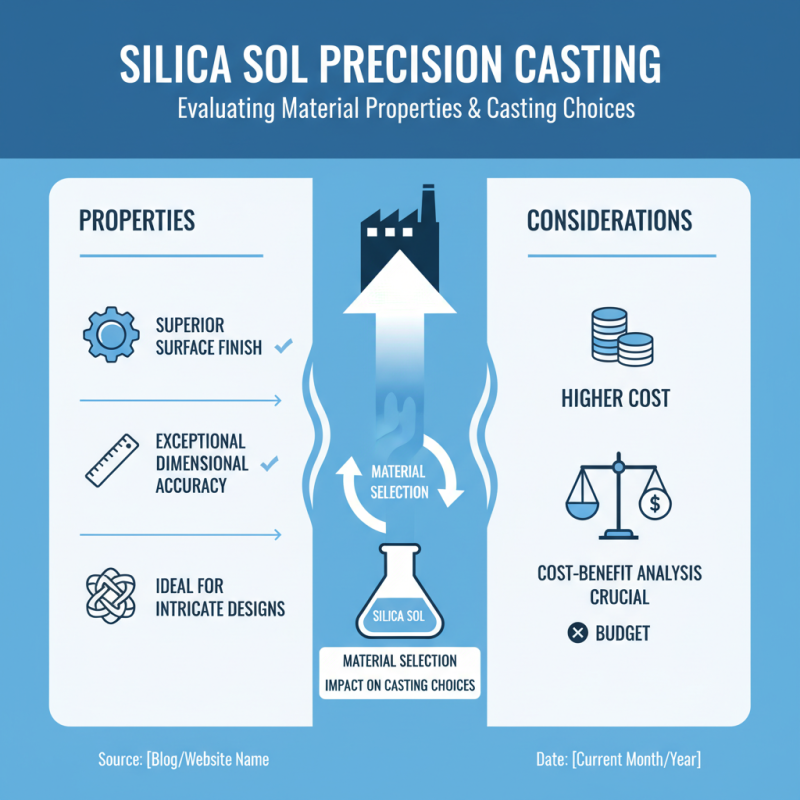
When evaluating material properties for silica sol precision casting, understanding the impact on casting choices is essential. Silica sol is known for its superior surface finish and dimensional accuracy. These properties make it a popular choice for intricate designs. However, the cost can be higher compared to other materials. Weighing the benefits against expenses is crucial.
The thermal stability of silica sol also affects casting outcomes. It offers excellent resistance to high temperatures. This is vital for industries like aerospace and automotive. Nonetheless, one must consider compatibility with the final application. Not all designs benefit equally from silica sol. Testing prototypes can lead to insights that save resources later on.
Additionally, one must reflect on the mechanical properties of silica sol. While it provides strength, it may not be suitable for all environments. Analyzing wear and corrosion resistance is necessary. This ensures that the final product will withstand its intended conditions. Choices should be informed by rigorous testing and expert advice.
Identifying Your Specific Project Needs for Optimal Casting Selection
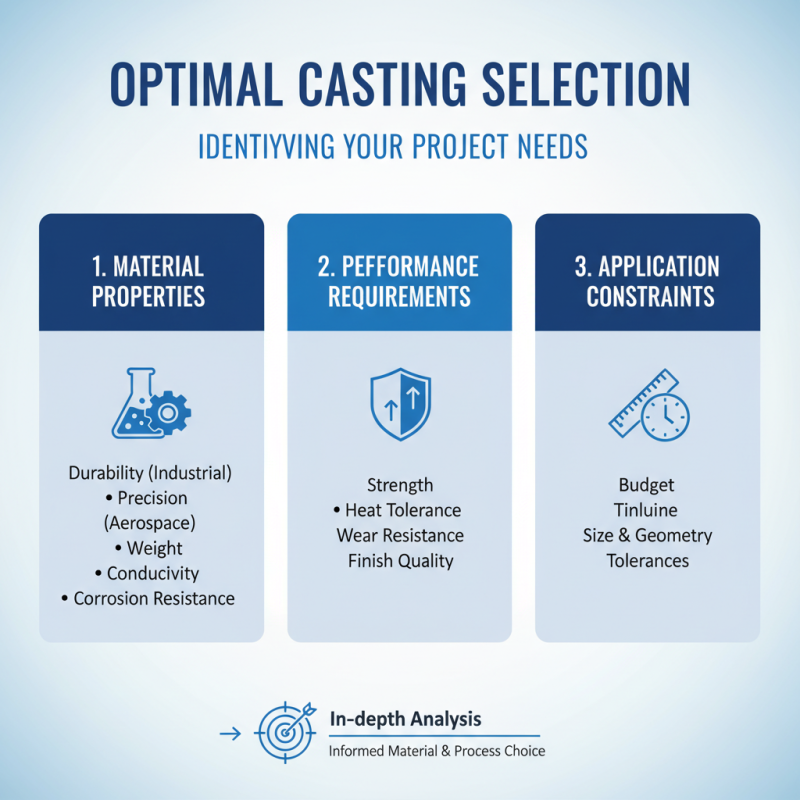
When embarking on a precision casting project, identifying specific needs is crucial. This process begins with understanding your desired material properties. Different projects require different characteristics. For example, durability may be paramount for industrial applications, while precision is vital for aerospace components. Know what you need.
Next, consider the dimensions and complexity of your project. Silica sol casting can produce intricate designs. However, challenging geometries might increase costs and production time. Assess whether your design can be simplified without sacrificing essential features. This reflection can save both time and resources.
Additionally, evaluate the finishing processes required after casting. Some projects might demand additional machining or surface treatments. This should factor into your initial planning. A well-thought-out approach can streamline production and reduce unexpected hurdles. Balancing these elements will help you choose the most appropriate silica sol casting method for your project.