2026 Best Stainless Steel Casting Solutions for Global Buyers?
The global market for Stainless Steel Casting is poised for growth. According to recent industry reports, the stainless steel casting market is expected to reach $26 billion by 2026. This growth is driven by increased demand in sectors like automotive, aerospace, and medical devices.
With advancements in manufacturing technologies, the quality and efficiency of stainless steel casting have improved. Various companies are now adopting innovative casting techniques. These techniques enhance durability and performance while minimizing production costs. However, challenges remain in sourcing quality raw materials and ensuring consistent supply chains.
As buyers seek reliable partners, selecting the right casting solutions is crucial. The need for transparency in sourcing and production processes is greater than ever. In this competitive landscape, suppliers must showcase their expertise and commitment to quality. Reflecting on past projects and learning from them can lead to future successes in stainless steel casting.

Overview of Stainless Steel Casting: Definition and Applications
Stainless steel casting plays a crucial role in various industries due to its unique properties. It offers strength, corrosion resistance, and high-temperature durability. This makes it ideal for applications in the automotive, aerospace, and medical fields. According to a recent market report, the global stainless steel casting market is expected to grow at a CAGR of 5.3% from 2022 to 2027. Such growth reflects its increasing demand worldwide.
The versatility of stainless steel casting allows manufacturers to create complex shapes with precision. This technique can produce intricate components for machinery and structures. For instance, components in chemical processing often rely on stainless steel's corrosion resistance. However, challenges exist. The casting process can lead to defects like porosity and inclusions if not monitored closely. These imperfections could compromise product reliability, making quality control paramount.
In addition to applications, the environmental impact of stainless steel casting cannot be overlooked. The energy-intensive process raises questions about sustainability. Companies are increasingly urged to adopt eco-friendly practices. Transitioning to greener technologies could mitigate some negative effects and improve the industry's overall image. As buyers seek reliable solutions, focusing on both quality and environmental responsibility will likely become more critical.
2026 Global Stainless Steel Casting Market Overview
Key Features and Benefits of Stainless Steel Casting Solutions
Stainless steel casting offers a robust solution for a variety of industries. Its corrosion resistance makes it ideal for environments exposed to moisture and chemicals. This ensures durability and longevity, reducing the need for frequent replacements. Many manufacturers prefer stainless steel for its strength-to-weight ratio. It combines lightweight properties with added strength, enhancing overall performance.
The versatility of stainless steel casting plays a crucial role in various applications. From automotive parts to medical devices, its adaptability is unmatched. These castings can be tailored to fit specific requirements. However, the casting process can be complex. It requires expertise to achieve the desired precision and finish. This complexity might lead to inconsistencies if not managed properly. Effective quality control measures are essential.
Cost is also a consideration. While stainless steel may be more expensive upfront, long-term savings are significant due to its durability. Buyers should evaluate their needs carefully. Selecting the right casting solution is vital for project success. Reflecting on the balance between initial costs and long-term benefits can guide a well-informed decision.
2026 Best Stainless Steel Casting Solutions for Global Buyers
| Feature |
Description |
Benefits |
Applications |
| Corrosion Resistance |
Excellent resistance to various corrosive environments |
Increased durability and longevity of components |
Marine, Chemical Processing |
| High Strength |
Strong mechanical properties suitable for heavy loads |
Reduces need for material substitutions |
Construction, Automotive |
| Versatility |
Can be cast into complex shapes |
Allows for innovative designs |
Aerospace, Medical Devices |
| Heat Resistance |
Maintains structural integrity at high temperatures |
Suitable for high-temperature applications |
Power Generation, Oil & Gas |
| Aesthetic Appeal |
Shiny, polished surfaces provide visual appeal |
Enhances product presentation |
Cookware, Architectural Features |
Leading Global Suppliers in the Stainless Steel Casting Industry
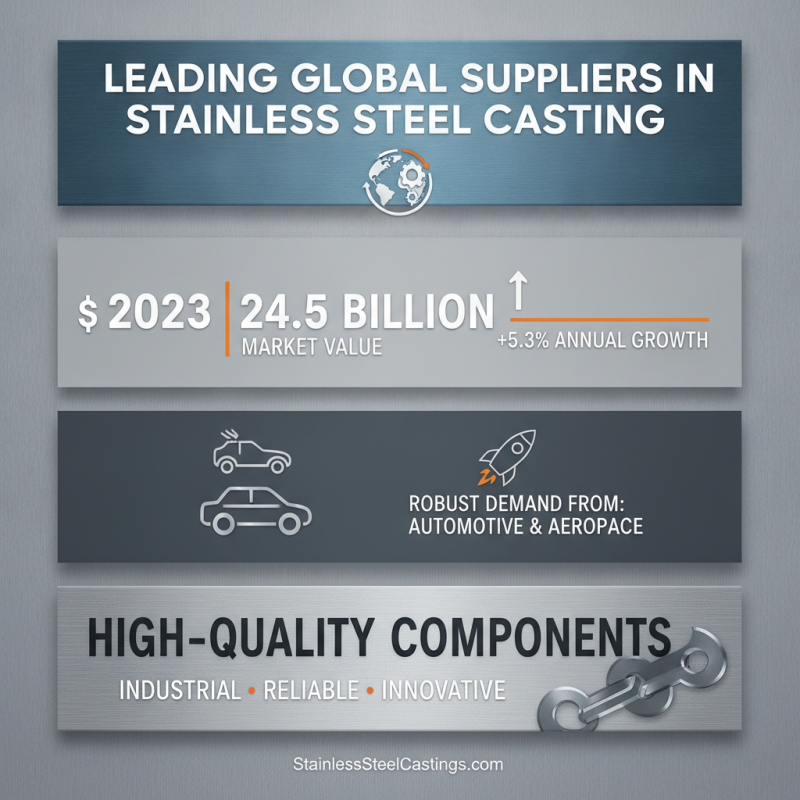
The stainless steel casting industry is witnessing a significant transformation. In 2023, the market value reached $24.5 billion, showing a steady annual growth rate of 5.3%. This indicates a robust demand for high-quality stainless steel components across various sectors, including automotive and aerospace.
Leading suppliers play a pivotal role in meeting this demand. They focus on innovative casting techniques and advanced technologies. Many factories invest in automated processes, enhancing precision and reducing production waste. According to industry reports, over 60% of companies prioritize sustainability in their production methods. Yet, some facilities still find it challenging to balance efficiency with environmental impact.
Quality assurance remains crucial. Many buyers seek certifications like ISO 9001 to ensure reliability. Yet, not all suppliers maintain consistent quality. Challenges such as fluctuating raw material prices and supply chain disruptions complicate the landscape. Buyers must conduct thorough research to find reliable partners in this evolving market. Collaborating with suppliers who demonstrate a commitment to quality and sustainability is essential for success.
Innovations and Technologies in Stainless Steel Casting Techniques
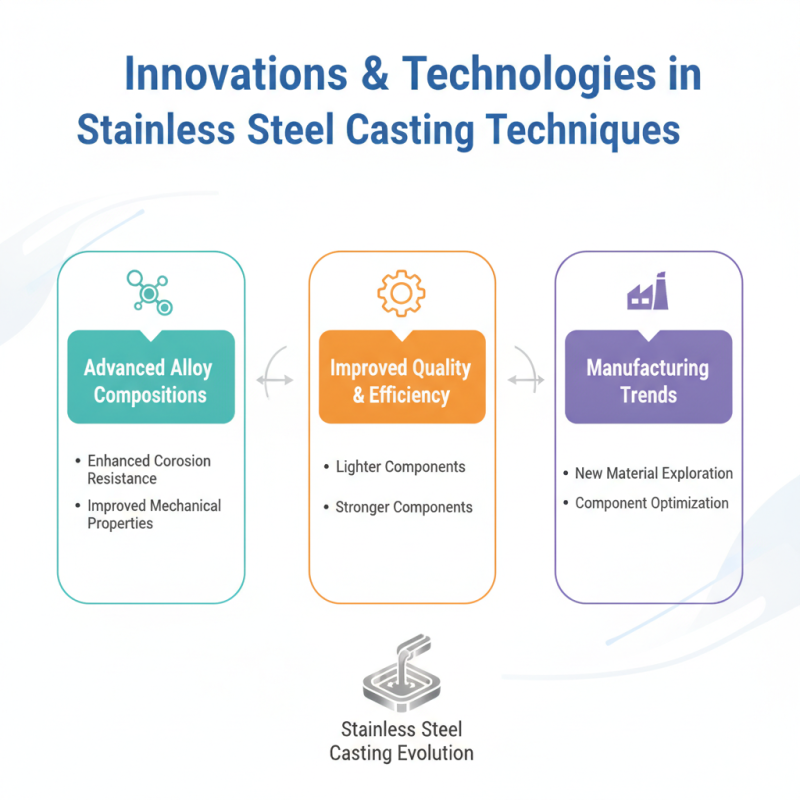
Stainless steel casting has evolved significantly, showcasing innovative techniques that improve quality and efficiency. One promising trend involves advanced alloy compositions. These new materials can enhance corrosion resistance and mechanical properties. Manufacturers are exploring different compositions, leading to lighter and stronger components.
Another noteworthy development is the integration of automation in casting processes. Automated systems reduce human error and ensure consistency. However, this shift requires retraining workers to operate advanced machinery. Balancing technology and human expertise remains a challenge. Companies must navigate this transition carefully.
Moreover, additive manufacturing is making waves in the casting industry. 3D printing technologies allow for intricate designs that traditional methods cannot achieve. While this opens new avenues, it also raises questions about scalability and production efficiency. Not all designs created via 3D printing are viable for mass production, prompting further research. The future of stainless steel casting relies on finding the right balance between innovation and practicality.
Factors to Consider When Choosing a Stainless Steel Casting Provider
Choosing the right stainless steel casting provider can significantly impact project success. Several factors should be considered. Quality assurance is one crucial aspect. According to a recent industry report, 30% of casting defects come from inadequate quality checks. A solid quality control process ensures that products meet specifications and reduce waste.
Experience in the industry is another significant factor. Providers with over a decade of experience generally deliver better results. They are usually adept at handling varied client needs. A study by the Foundry Industry Association emphasized that experienced manufacturers often have lower error rates. However, some new companies may offer innovative approaches worth exploring.
Cost should not be the only deciding factor. While competitive pricing is attractive, it can sometimes lead to compromised quality. A balance between cost and quality assurance is essential. Trustworthy providers often provide transparency in their processes. Selecting a provider based solely on price can lead to unexpected costs down the line, which can diminish overall project value.