Leave Your Message

What Is Alloy Steel Casting Parts Used For?

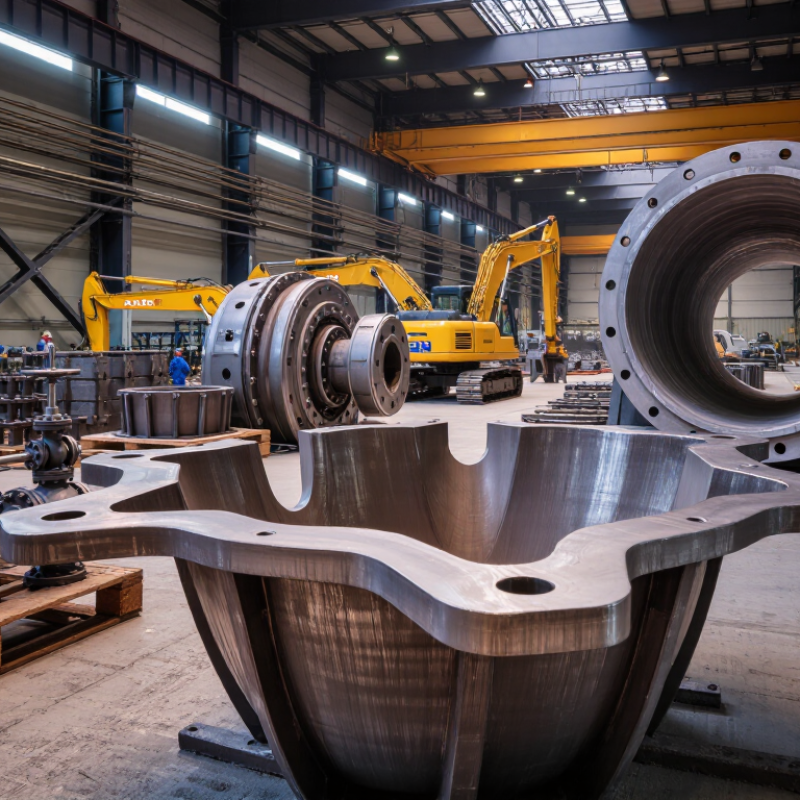
Alloy Steel Casting Parts support demanding industries where ordinary steel may lose strength, wear resistance, or stability. These components appear in mining crushers, cement mills, power-generation equipment, construction machinery, valves, pumps, and heavy transportation systems. Their value comes from controlled alloying and carefully managed casting, not from appearance alone. A rough surface can hide serious internal weakness.

The World Steel Association reported approximately 1.89 billion tonnes of crude steel production worldwide in 2023. That figure shows the scale of steel demand, although it does not isolate cast alloy components. The USGS Mineral Commodity Summaries 2024 also highlights chromium, nickel, and molybdenum as important industrial materials. Their supply conditions can influence alloy design, purchasing decisions, and production costs. These reports provide useful context, but they cannot replace foundry-level testing.

Professor John Campbell, a leading casting researcher and author, stated, “The quality of a casting is determined by the quality of the liquid metal.” That principle remains practical on a factory floor. Clean melting, accurate pouring temperatures, sound mold design, and heat treatment determine whether Alloy Steel Casting Parts survive real service. A crusher liner may face repeated impact. A pump body may endure pressure, corrosion, and vibration. Different failures require different alloy choices.

The picture is not perfect. Public statistics rarely separate alloy steel castings from broader steel categories. Buyers should examine chemical certificates, mechanical test results, non-destructive inspection records, and traceability documents. The best selection balances strength, service life, repairability, and total cost. This article explores where Alloy Steel Casting Parts are used and why their design details matter.
What Is Alloy Steel Casting Parts Used For?

What Are Alloy Steel Casting Parts?

Alloy steel casting parts are metal components formed by pouring molten alloy steel into a prepared mold. Unlike plain carbon steel, alloy steel contains elements such as chromium, nickel, molybdenum, or manganese. These additions can improve hardness, toughness, wear resistance, and performance at elevated temperatures. The final properties depend on chemical composition, pouring temperature, cooling rate, and heat treatment.

The shape begins in the mold. Complex passages, thick sections, and curved profiles can be produced without assembling many smaller pieces. After solidification, workers remove the casting, clean its surface, and machine critical areas. Engineers may check dimensions, hardness, chemical composition, and internal defects through suitable inspection methods. Practical foundry experience shows that small changes in cooling can affect strength and distortion.

These parts are used in mining equipment, construction machinery, energy systems, rail equipment, and heavy industrial plants. A crusher liner may resist repeated impact, while a pump casing may handle pressure and abrasive media. Furnace components often need strength during thermal cycling. However, alloy steel is not automatically the best choice. A poorly selected grade can increase cost, machining difficulty, or cracking risk. Even a sound-looking casting may contain hidden porosity. Design reviews and process records remain important, although they do not remove every uncertainty.
Why Are Alloy Steel Alloys Used in Cast Components?

What Is Alloy Steel Casting Parts Used For?

Why Are Alloy Steel Alloys Used in Cast Components?

Alloy steel casting parts serve demanding industries where ordinary carbon steel may wear, crack, or soften. Common applications include pump bodies, valve housings, crusher liners, gears, and heavy equipment frames. Their performance comes from carefully selected alloying elements. Chromium can improve hardness and corrosion resistance. Nickel can support toughness under impact. Molybdenum can help components resist heat and deformation. These benefits make cast alloy steel suitable for mining, construction, power generation, and material processing equipment.

Casting also allows engineers to produce complex shapes with fewer welded sections. That can reduce weak joints and simplify certain designs. In practical production, however, chemistry alone does not guarantee reliability. Pouring temperature, mold quality, heat treatment, and cooling control all matter. Poor control may create porosity, distortion, or uneven hardness. A higher alloy content is not automatically better. It can increase cost and make machining more difficult.

Tips

Match the alloy to the working environment. Check load, temperature, abrasion, and corrosion before selecting a grade. Request material certificates and heat-treatment records from the supplier. Dimensional inspection and non-destructive testing can reveal hidden casting defects. It is also useful to review service failures honestly. A component that lasted five years may still need redesign if maintenance costs remained high. Small design changes, such as smoother transitions and stronger fillets, can reduce stress concentration. Tested assumptions are safer than attractive specifications.

What Is Alloy Steel Casting Used For?

Alloy steel castings are commonly used for pump bodies, valve components, gears, mining parts, construction machinery, and high-load structural components. The chart shows representative alloying-element ranges found in low-alloy steel casting grades. These elements improve hardenability, strength, wear resistance, toughness, and heat performance.

Representative composition ranges in weight percent; exact limits vary by casting grade and applicable material specification.

Which Industries Use Alloy Steel Casting Parts?

Alloy steel casting parts serve industries that face impact, heat, pressure, or abrasive materials. Mining equipment uses them in crusher bodies, mill liners, bucket teeth, and conveyor components. These parts may contact sharp rock continuously. Chromium, molybdenum, and nickel can improve hardness, toughness, or heat resistance when properly balanced.

Energy infrastructure is another major user. Power plants install alloy steel castings in valves, turbine housings, pump bodies, and pressure components. The International Energy Agency reported nearly 510 GW of renewable capacity additions in 2023, increasing demand for durable equipment across power projects. However, renewable systems still need conventional cast components. Engineers must check fatigue, corrosion, and thermal cycling rather than rely on alloy content alone.

Construction, rail transport, agriculture, and industrial machinery also depend on these castings. Rail operators use them for bogie and coupling components, while construction machines require strong frames, gears, and hydraulic parts. The World Steel Association recorded approximately 1.89 billion tonnes of crude steel production in 2023, showing the scale of steel-based infrastructure worldwide. Yet this figure does not measure casting demand directly. That distinction matters. ASTM specifications, heat-treatment records, dimensional inspection, and non-destructive testing help confirm service reliability. In practice, a casting can look sound and still contain internal defects. Careful ultrasonic or radiographic inspection remains essential.

What Types of Equipment Use Alloy Steel Castings?

What Is Alloy Steel Casting Parts Used For?

Alloy steel castings serve equipment facing impact, heat, abrasion, or heavy loads. Common examples include mining crushers, excavator buckets, slurry pumps, valves, cement kilns, and power-generation components. Their alloying elements improve toughness, hardness, or heat resistance after controlled heat treatment. The World Steel Association reported 1.892 billion tonnes of crude steel production in 2023. This scale reflects steel’s central role in industrial equipment, although casting demand forms only part of that volume.

Mining machinery often uses alloy steel castings for crusher liners, shovel teeth, and conveyor supports. Cement plants use them around grinding systems and hot material handling. In energy facilities, cast components may appear in valve bodies, turbine housings, and boiler-related equipment. The NACE IMPACT study estimated global corrosion costs at about 3.4% of global GDP. This figure supports careful material selection, especially where moisture, chemicals, and abrasion combine. Still, alloy steel is not automatically the best choice. A harder grade can become difficult to machine or more vulnerable to cracking.

Tips: Match the alloy to the actual failure mode. Check impact energy, hardness, operating temperature, and weldability. Maintenance records matter. A casting selected from a catalogue may fail early when real loading differs. Allow inspection of radiographs, heat-treatment records, and dimensional tolerances. Small oversights can become expensive downtime.

How Are Alloy Steel Casting Parts Selected for Applications?

What Is Alloy Steel Casting Parts Used For?

How Are Alloy Steel Casting Parts Selected for Applications?

Alloy steel casting parts serve in pumps, valves, mining equipment, transport systems, and heavy industrial machinery. Their value comes from strength, toughness, wear resistance, and performance under heat. Selection should begin with the real service conditions, not the component drawing alone. A valve body facing hot, pressurized fluid needs different properties from a crusher liner exposed to repeated impact.

Engineers normally review load, temperature, corrosion, abrasion, and expected service life. They also examine section thickness and casting geometry. Thick areas cool slowly and may develop internal defects or uneven properties. The chosen alloy must support the required heat treatment, machining process, and inspection method. Charpy impact testing, hardness checks, chemical analysis, and non-destructive testing can reveal risks that appearance cannot show. Standards help, but they do not replace application-specific judgment.

Small details matter.

A casting supplier should provide traceable material records and clear inspection results. Production history is useful when similar parts have survived comparable conditions. Still, past success is not proof. A specification can look complete and miss thermal cycling, abrasive particles, or sudden impact. Trial castings and field feedback often expose these weaknesses. Cost also needs careful review. A cheaper alloy may require frequent replacement, while an overly strong grade may increase machining difficulty and waste. The best selection balances safety, performance, manufacturability, and verified service evidence.

What Is Alloy Steel Casting Parts Used For? - How Are Alloy Steel Casting Parts Selected for Applications?
Alloy Steel Casting Grade Typical Alloying Elements Main Material Characteristics Common Casting Parts Typical Industries and Applications Approximate Service Temperature* Key Selection Considerations
ASTM A217 WC6 Approximately 1.25% chromium and 0.5% molybdenum Improved high-temperature strength and oxidation resistance compared with plain carbon steel Valve bodies, bonnets, pressure housings, pump casings and fittings Steam systems, thermal power equipment, refineries and high-temperature pressure piping Up to about 540°C Selected when moderate creep resistance and elevated-temperature pressure strength are required at a controlled cost
ASTM A217 WC9 Approximately 2.25% chromium and 1% molybdenum Higher oxidation resistance and elevated-temperature strength than lower-chromium Cr-Mo grades High-pressure valve bodies, turbine casings, manifolds and pump components Boilers, steam turbines, petrochemical processing and power-generation systems Up to about 590°C Suitable for hot steam and pressure service where creep strength, weldability and post-weld heat treatment requirements must be balanced
ASTM A217 C5 Approximately 5% chromium and 0.5% molybdenum Strong resistance to oxidation, hot corrosion and high-temperature scaling Valve bodies, turbine components, furnace fittings and high-temperature piping castings Refining, petrochemical processing, power plants and furnace systems About 540–650°C, depending on stress and environment Chosen for hot corrosive gases and oxidizing atmospheres; operating stress and thermal cycling must be evaluated
ASTM A217 C12 Approximately 9% chromium and 1% molybdenum, with controlled additions of other elements High creep strength, good oxidation resistance and improved performance in advanced steam service Steam valve bodies, headers, turbine casings and pressure-retaining castings Ultra-supercritical and high-efficiency power-generation equipment Commonly used around 565–620°C, subject to design conditions Requires strict heat treatment, welding control and inspection because long-term creep performance is critical
ASTM A743 CA6NM Approximately 13% chromium and 4% nickel, with molybdenum commonly specified Martensitic stainless steel with good strength, cavitation resistance and corrosion resistance Hydraulic turbine runners, pump casings, impellers, valve components and wear-resistant water-contact parts Hydropower, water treatment, seawater equipment and hydraulic machinery Generally selected for ambient to moderate-temperature service Useful when strength and resistance to water-related corrosion or cavitation are more important than maximum ductility
ASTM A743 CF8M Approximately 19% chromium, 10% nickel and 2–3% molybdenum Austenitic stainless casting with strong general corrosion resistance and good toughness Pump casings, valve bodies, impellers, flanges and chemical-processing housings Chemical processing, food processing, marine service, water systems and pharmaceutical equipment Commonly used from cryogenic service to about 400°C, depending on conditions Selected for chloride-containing or chemically aggressive environments; pitting, crevice corrosion and stress corrosion must be assessed
ASTM A128 Hadfield Steel Typically about 11–14% manganese and approximately 1% carbon High work-hardening capacity, excellent impact toughness and strong resistance to abrasive impact Crusher jaws, mantles, railway crossings, impact plates and excavator wear components Mining, quarrying, aggregate processing, railway infrastructure and heavy material handling Usually selected for ambient-temperature wear service Performs best under high impact and compressive loading; it is not normally chosen for severe sliding wear without impact
Low-Alloy Ni-Cr-Mo Steel Castings Nickel, chromium and molybdenum in controlled low-alloy proportions High hardenability, tensile strength and toughness after suitable heat treatment Gear housings, axle housings, structural brackets, heavy-duty hubs and machine frames Construction machinery, transportation equipment, lifting systems and general heavy engineering Typically ambient to about 300°C Selected when impact toughness, section thickness, fatigue resistance and heat-treatment response are more important than corrosion resistance
Heat-Resistant HK-Type Stainless Casting Typically high chromium and nickel with approximately 0.4% carbon or more, depending on specification Good resistance to carburization, oxidation, thermal cycling and high-temperature deformation Furnace tubes, radiant coils, baskets, trays, burner components and heat-treatment fixtures Industrial furnaces, petrochemical units, heat-treatment plants and thermal-processing equipment Often used around 850–1,050°C, depending on alloy and loading Chosen according to atmosphere, thermal cycling, creep stress, carburization potential and required casting geometry
*Temperature ranges are general engineering indications, not design limits. Final material selection should consider pressure, stress, corrosion or wear mechanism, casting section thickness, heat treatment, applicable standards, inspection requirements and the complete service environment.