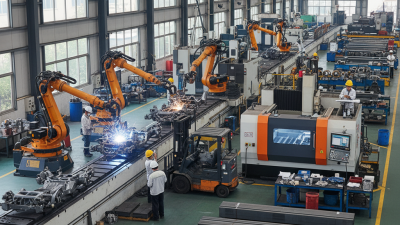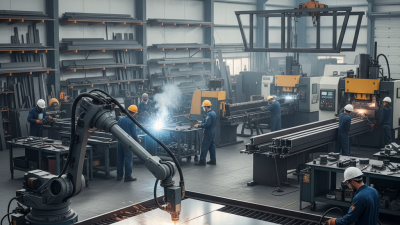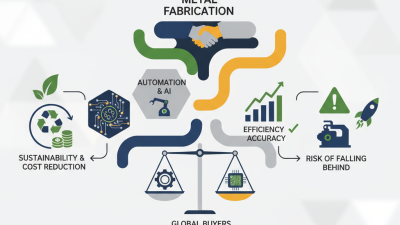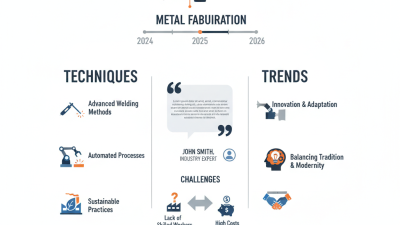
Metal fabrication is a crucial industry for building a wide range of products. It involves the process of transforming raw materials into finished components. These techniques are essential for global buyers seeking quality and efficiency.
The methods used in metal fabrication vary greatly. Each technique comes with its own advantages and limitations. Understanding these methods is vital for any buyer in the global market. Buyers can save time and costs by choosing the right technique for their needs.
Moreover, the landscape of metal fabrication is continuously evolving. New technologies are emerging, and traditional methods are being optimized. It is essential for buyers to stay informed about these trends. They must evaluate their options carefully to ensure they are making informed decisions. Metal fabrication can be complex, but knowledge is the key to success.
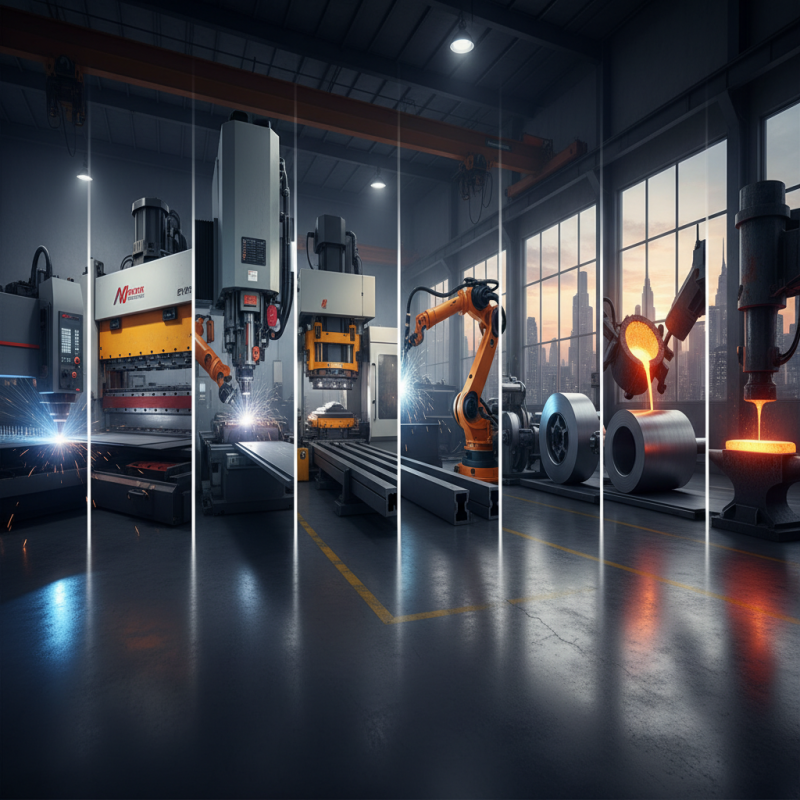
Understanding metal fabrication techniques is essential for global buyers in today’s competitive market. Various methods cater to different needs, whether for construction, automotive, or aerospace industries. Buyers should familiarize themselves with welding, cutting, and machining, as these are foundational techniques.
Welding creates robust connections. Techniques such as MIG and TIG welding are widely used. Each method has unique applications and can significantly affect the final product's quality. Cutting methods like laser and plasma also deserve attention. They provide precision and efficiency, crucial for intricate designs.
Tips: Always verify the fabricator's credentials. An experienced provider enhances reliability. Request samples before committing to large orders. This can prevent costly mistakes.
Machining is another vital technique. It allows for creating complex shapes with high accuracy. CNC machining is popular due to its flexibility and repeatability. However, not every project requires high precision. Sometimes, standard methods can suffice. Consider the project's needs before deciding on the technique.
Tips: Evaluate your project requirements closely. Simple solutions can sometimes be the best. Don't hesitate to ask for expert advice from fabrication specialists.
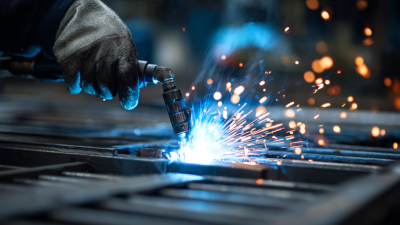
Welding is a crucial technique in metal fabrication. It connects materials by heating them until they fuse. Many industries rely on effective welding methods. Common practices include MIG, TIG, and Stick welding. Each has unique advantages suited for different applications.
MIG welding is popular for its speed. It creates strong bonds with minimal cleanup. However, it may not be ideal for all materials. TIG welding offers precision that MIG lacks. It's used for thin materials or when aesthetics matter. Yet, it requires skilled operators, which can raise training costs.
Stick welding is versatile and effective for outdoor work. It’s portable and can handle dirty surfaces. Yet, its finish may not be as smooth as other methods. Reflecting on these techniques, choosing the right welding method often needs careful consideration. Factors such as material type and project requirements shape these choices. While there are established practices, the best solution often involves trial and error.
Cutting techniques play a crucial role in metal fabrication. Each method caters to different materials and project requirements. Laser cutting is precise, offering intricate designs while minimizing material waste. Waterjet cutting, on the other hand, excels in versatility. It can handle various thicknesses and won’t alter the material’s properties due to heat. Plasma cutting is another popular choice. It provides speed and efficiency, making it ideal for thicker metals.
Despite the advantages, these techniques come with challenges. Laser cutting requires careful calibration, or results can be skewed. The accuracy also depends on the thickness of the material. Waterjet cutting, while versatile, involves higher operational costs. Plasma cutting, while fast, can produce rough edges that need additional finishing. Understanding these nuances is essential for global buyers. They must carefully assess project specifications and budget constraints. Choosing the right cutting technique can greatly enhance the fabrication process, ensuring quality results.
Machining processes play a pivotal role in metal fabrication, emphasizing both precision and efficiency. According to a recent report by the International Federation of Robotics, the global market for industrial robots in machining applications is projected to reach $18 billion by 2025. This growth showcases the increasing reliance on advanced machinery to enhance production capabilities and reduce operational costs.
Precision in machining is achieved through various methods, including CNC machining and laser cutting. These techniques allow for high tolerance levels, often within 0.01 mm. However, challenges remain. The complexity of intricate designs can lead to increased scrap rates. A study from the Metalworking Industry Research Association noted that up to 25% of material can be wasted in poorly optimized machining processes.
Efficiency in machining also hinges on the choice of tooling and setup. Proper tool selection can significantly decrease cycle times. Yet, some manufacturers still face difficulties in maintaining tool life, affecting overall productivity. A survey from the Manufacturing Institute found that 30% of fabricators struggle with machine downtime. Addressing these issues requires a commitment to continuous improvement and technology integration.
| Technique | Description | Applications | Efficiency Rating |
|---|---|---|---|
| Laser Cutting | Uses a high-powered laser to cut materials with precision. | Sheet metal, automotive parts, signage | High |
| CNC Machining | Automated process that uses computer-controlled tools to shape materials. | Aerospace, medical devices, custom parts | Very High |
| Welding | Joins materials together by melting them at the weld seams. | Construction, automotive, pipelines | Medium |
| Metal Stamping | Processes thin metal sheets into desired shapes using pressing machines. | Consumer products, automotive parts | High |
| 3D Metal Printing | Additive manufacturing technique to create complex parts layer by layer. | Aerospace, prototyping | Medium |
| Bending | Utilizes force to create angles and shapes in metal sheets. | Furniture, enclosures | High |
| Metal Forming | Shapes metal using tools and dies without cutting it. | Containers, automotive parts | Medium |
| Hydroforming | Uses high-pressure hydraulic fluid to shape metal into complex forms. | Automotive, bicycle frames | High |
| Punching | Creates holes in metal sheets using a die and punch. | Electronics, automotive | Medium |
| Extrusion | Forces metal through a die to create long shapes with uniform cross-sections. | Structural components, railings | High |
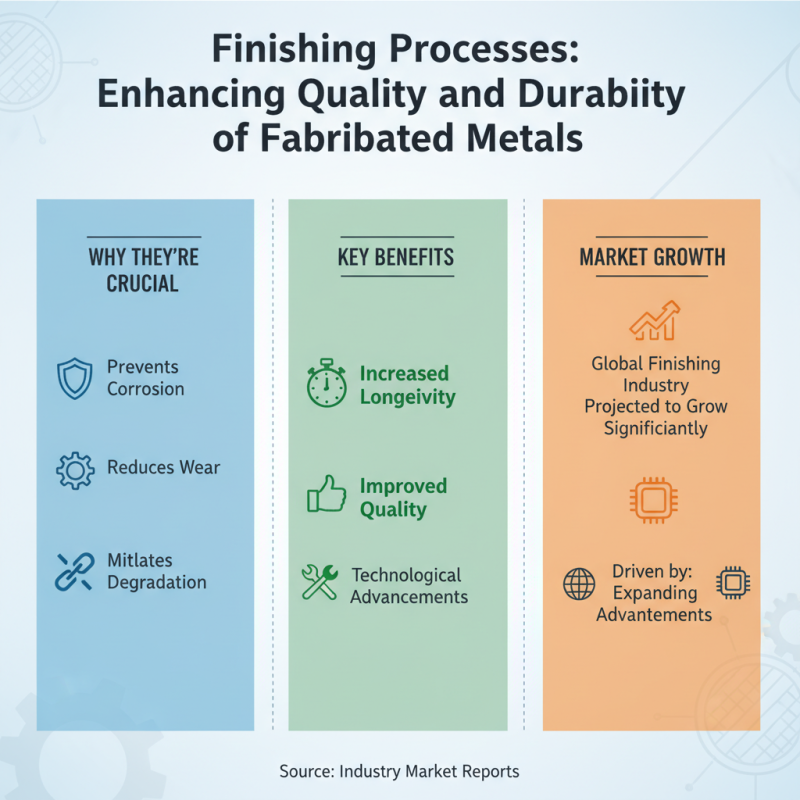
Metal fabrication often requires specialized finishing processes to enhance quality and durability. These processes improve the longevity of fabricated metals by preventing corrosion, wear, and other forms of degradation. According to market reports, the global finishing industry is projected to grow significantly, driven by advancements in technologies and increasing applications across various sectors.
Common finishing techniques include powder coating, anodizing, and electroplating. Powder coating provides a tough exterior, which is especially beneficial in outdoor environments. Anodizing enhances aluminum's resistance to corrosion while improving its aesthetic appeal. However, not all techniques are suitable for every project. Understanding your material's requirements is crucial.
Tips: Always assess your metal type before choosing a finish. Different techniques yield varied results. For instance, electroplating is great for enhancing conductivity but may not be as durable as powder coating. Moreover, properly preparing the surface is essential. An inadequately prepared surface can lead to finish failure, which might require costly rework. Regular inspections during and after the finishing process can help catch issues early.