Top 5 Liquefaction Plant Technologies Explained?
In the realm of energy production, the "Liquefaction Plant" is a pivotal technology. According to Dr. Emily Chen, a leading expert in this field, "Innovative liquefaction methods are crucial for sustainable energy." These facilities convert natural gas into a liquid state, making transport and storage more efficient. However, the technology is not without its challenges.
One key issue is the environmental impact of liquefaction processes. While they reduce emissions compared to their fossil fuel counterparts, the energy required for liquefaction can be substantial. Moreover, every liquefaction plant must balance these energy demands with economic viability. Understanding the best technologies available is essential for optimizing performance.
Various liquefaction technologies, from the well-known Mixed Refrigerant Process to newer developments, each offer unique advantages and drawbacks. These methods must not only focus on efficiency but also address safety concerns. As the industry evolves, the quest for improvement continues. Engaging with these technologies requires a critical look at what works and what doesn’t. The dialogue on refining liquefaction plant methods is ongoing and vital for future advancements.
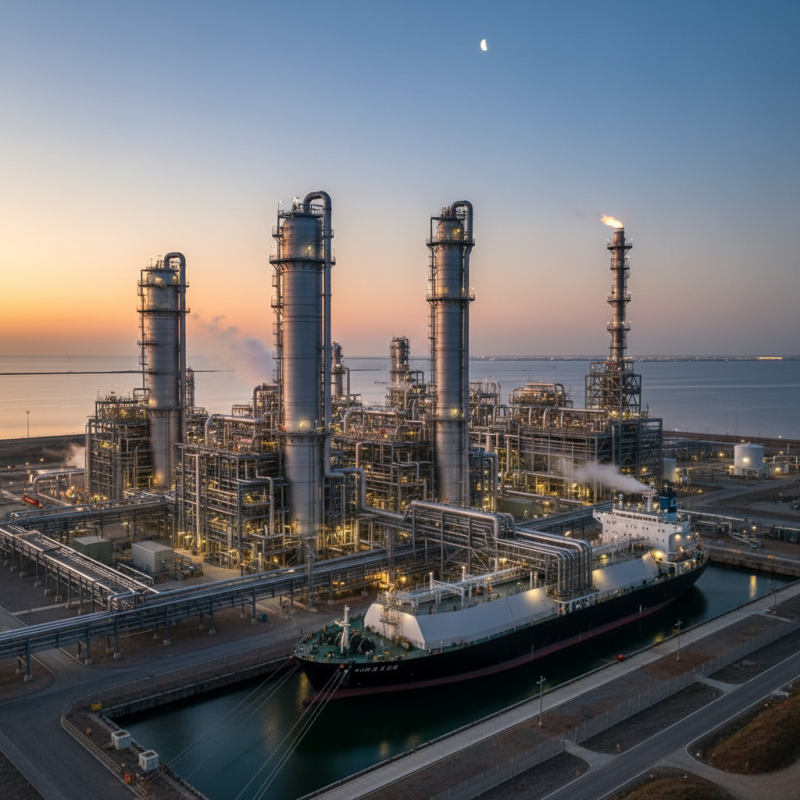
Overview of Liquefaction Processes in Natural Gas Industry
Liquefaction processes are crucial in the natural gas industry. They convert natural gas into a liquid state, reducing volume for storage and transport. This process occurs at low temperatures and high pressures. Different technologies exist, each with its unique features.
One common method is the use of the Air Cycle process. This technique cools natural gas using air. It has its benefits but can be inefficient in warmer climates. Alternatively, mixed refrigerant processes employ various refrigerants to enhance efficiency. While effective, they require careful monitoring to avoid potential issues.
Investing in new technologies can be challenging. The risk of high operational costs exists. Moreover, factors like energy consumption need to be addressed. As industries evolve, finding the right balance between efficiency and cost-effectiveness remains necessary. Each liquefaction method presents opportunities and limitations. This duality invites continuous evaluation and improvement.
Common Types of Liquefaction Plant Technologies
Liquefaction plant technologies are crucial for converting natural gas into liquid form. This process enhances storage and transport efficiency. Several key types of liquefaction technologies are widely used in the industry today.
The most common type is the Cascade process. It utilizes multiple refrigeration cycles. This method effectively cools natural gas to around -162°C. Studies show that this system can achieve 90% energy efficiency. Another significant technology is the Mixed Refrigerant process. It simplifies the cooling stages by using mixed refrigerants. Research indicates that this approach also speeds up the liquefaction rates.
Membrane technology provides a unique solution as well. It uses selective membranes to separate gas components. Membrane systems are more compact and potentially less costly. However, their adaptability can be a concern. Lastly, the Airtight system focuses on minimizing gas leaks during liquefaction. The reliability of this technology remains a topic of industry scrutiny. Each method has its pros and cons, illustrating the diverse landscape of liquefaction technologies.
Detailed Analysis of Convection and Cascade Liquefaction Systems
Liquefaction technologies have made significant strides, particularly with convection and cascade systems. Both methods have distinct advantages and drawbacks. Convection liquefaction employs a straightforward approach, relying on heat exchange to transform gas into liquid. It’s relatively simple but can face inefficiencies due to heat loss. Every loss adds complexity.
On the other hand, cascade liquefaction is more sophisticated. This system uses multiple stages of cooling, progressively lowering temperatures. It’s effective in achieving lower temperatures, but the complexity can lead to higher operational costs. More equipment typically means more maintenance. Operators must weigh these factors carefully. Not all facilities can afford such investment.
Moreover, both technologies must continuously evolve. Standards shift and new methods emerge. Keeping pace with advancements can be challenging. Facilities need to adopt a mindset of ongoing improvement. Embracing innovation is crucial. Without it, they risk obsolescence in a competitive landscape.
Emerging Technologies in Liquefaction Plants
Emerging technologies in liquefaction plants are changing the energy landscape. New methods aim to improve efficiency and reduce environmental impact. One notable advancement is the modular liquefaction process. This design allows for easier scaling of facilities, which can be crucial in meeting demand. Modularity also enhances flexibility, adapting to various feedstocks.
Another promising development is the use of cryogenic cooling techniques. This method can lower energy consumption significantly. It works by rapidly cooling natural gas to transform it into liquid form. Yet, the technology has its challenges. Achieving the ideal temperature requires precision and energy commitment, raising concerns about operational costs.
Carbon capture and storage integration is also trending. It can mitigate greenhouse gas emissions. While this is a step forward, many plants struggle to implement practical solutions. The technology's complexity can delay deployment. Continuous research is essential to address these hurdles and find viable paths forward. Innovation in liquefaction technologies is promising but demands careful engineering and consideration.
Comparative Advantages of Different Liquefaction Techniques
Liquefaction technologies play a crucial role in natural gas processing. Various techniques offer distinct advantages and challenges. For example, the Mixed Refrigerant Cycle is known for efficiency. Reports indicate that this method can achieve up to 90% energy efficiency. It works well in varying conditions, but can be complex to operate. The initial investment can be high, leading to concerns about cost recovery.
Another method, the Cascade Process, is favored for its simplicity. It employs a stepwise cooling system, making it easier to maintain. However, the energy efficiency is lower compared to its counterparts, often around 60%. This can raise questions about its viability for large-scale operations.
Membrane-based systems are emerging as an innovative option. Though promising, they face challenges in scalability and longevity. Preliminary data suggests these systems can reduce carbon footprints significantly. Yet, the technology is still maturing, and real-world performance remains to be validated. Each technique has its nuances, raising the need for careful evaluation before implementation.