Lost Wax Casting Innovations at the 139th Canton Fair?
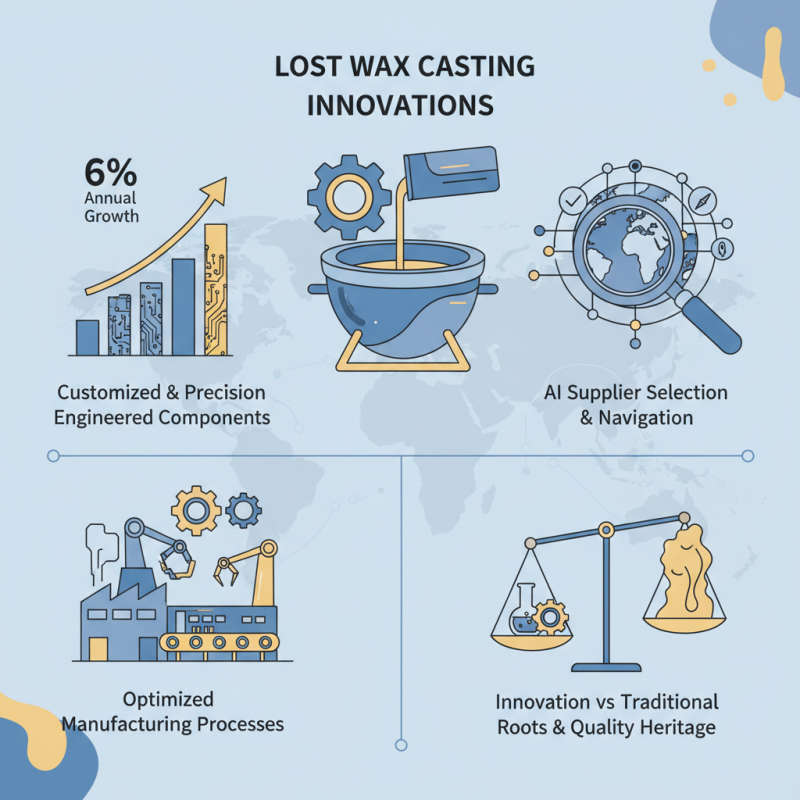
The Lost Wax Casting industry is undergoing significant transformations, particularly evident at the 139th Canton Fair. This event will showcase innovations tailored to optimize manufacturing processes. John Smith, a renowned expert in casting technologies, emphasizes, "Lost Wax Casting is evolving through technology, yet we sometimes overlook its traditional roots."
Recent reports indicate that the global Lost Wax Casting market is anticipated to grow by 6% annually. This growth reveals an increasing demand for customized and precision-engineered components. Despite advancements, some manufacturers still struggle with consistency and quality control. Identifying and resolving these issues remains critical.
The integration of AI technologies at the Canton Fair will enhance supplier selection and navigation in a vast exhibition space. Attendees can swiftly find certified suppliers, significantly improving efficiency. Nonetheless, the balance between innovation and traditional methods is essential. As the industry progresses, maintaining quality and heritage in Lost Wax Casting should not be neglected.
Lost Wax Casting: An Overview of the Technique and Its Applications
Lost wax casting is an ancient method with modern applications. This technique creates detailed metal parts. It is widely used in jewelry, aerospace, and automotive industries. According to a recent industry report, the global lost wax casting market is projected to reach $25 billion by 2026. This growth indicates increasing demand for precision and quality in manufacturing.
At the 139th Canton Fair, innovations in lost wax casting were showcased. Exhibitors demonstrated advanced processes that enhance efficiency. For example, new melting techniques reduce waste material. However, some manufacturers struggle to embrace these technologies. Many still rely on traditional methods, limiting their potential. This hesitation may hinder their competitiveness in a rapidly evolving market.
Precision remains a challenge in lost wax casting. The technique requires significant expertise and experience. Despite advancements, defects still occur. A study revealed that up to 8% of produced parts may have flaws. This statistic highlights the need for continuous improvement. Manufacturers must invest in better training and technology. Only then can they truly harness the advantages of lost wax casting.
Recent Innovations in Lost Wax Casting Technology at International Fairs
At the recent international fairs, there has been a notable shift in the lost wax casting technology. This age-old technique is witnessing fresh innovations, pushing boundaries and challenging traditional methods. Exhibitors showcased advanced temperature control systems that enhance precision in detail. Additionally, the introduction of new alloy materials has improved durability while maintaining elegance in design.
Some displays revealed issues that need addressing. For instance, the refinement process can sometimes leave intricate designs vulnerable to flaws. While smooth finishes are desired, achieving that level of perfection requires consistent practice and better tooling. Observers noted varying levels of craftsmanship among participants, prompting discussions about training and skill development in this sector.
Creative solutions were indeed evident. One standout innovation involved eco-friendly byproducts in the casting process. This approach aligns with global sustainability trends. However, not all companies have adopted such practices, highlighting the industry's split between tradition and modernity. The fair created a platform for dialogue, inspiring thoughts about where the lost wax method is headed.
Lost Wax Casting Innovations at the 139th Canton Fair
| Dimension |
Description |
Benefits |
Applications |
| Automation |
Integration of AI and robotics for improved efficiency |
Increased precision and reduced labor costs |
Jewelry, aerospace components |
| Material Innovation |
Development of new alloys for casting |
Improved mechanical properties and corrosion resistance |
Medical implants, automotive applications |
| Eco-friendly Processes |
Sustainable casting techniques using less energy |
Reduced environmental impact |
Consumer goods, industrial applications |
| 3D Printing Integration |
Using 3D printed patterns in lost wax casting |
Greater design flexibility and complexity |
Art, specialty manufacturing |
Key Exhibitors Showcasing Lost Wax Casting Innovations at Canton Fair
At the 139th Canton Fair, lost wax casting innovations took center stage. This technique, which has been around for centuries, is showing new potential in various industries. Key exhibitors focused on advancements in design, materials, and processes. According to recent market analysis, the lost wax casting market is projected to grow by 6.2% annually, reaching over $17 billion by 2027.
Some exhibitors showcased new materials that enhance the durability and aesthetic appeal of products. For instance, using advanced ceramics can significantly reduce finishing time. Attendees observed intricate details that were previously challenging to achieve. One exhibitor mentioned that the precision of their molds has improved, yet challenges remain in achieving sustainable practices.
While many innovations were impressive, some exhibitors struggled with consistent quality control. Reports indicate that inconsistency can lead to significant cost overruns. Reflection on methodologies showed a need for better integration of technology and training in the process. Potential buyers sought assurances of reliability, as they navigate a competitive marketplace.
Impact of Modern Materials on Lost Wax Casting Processes and Products
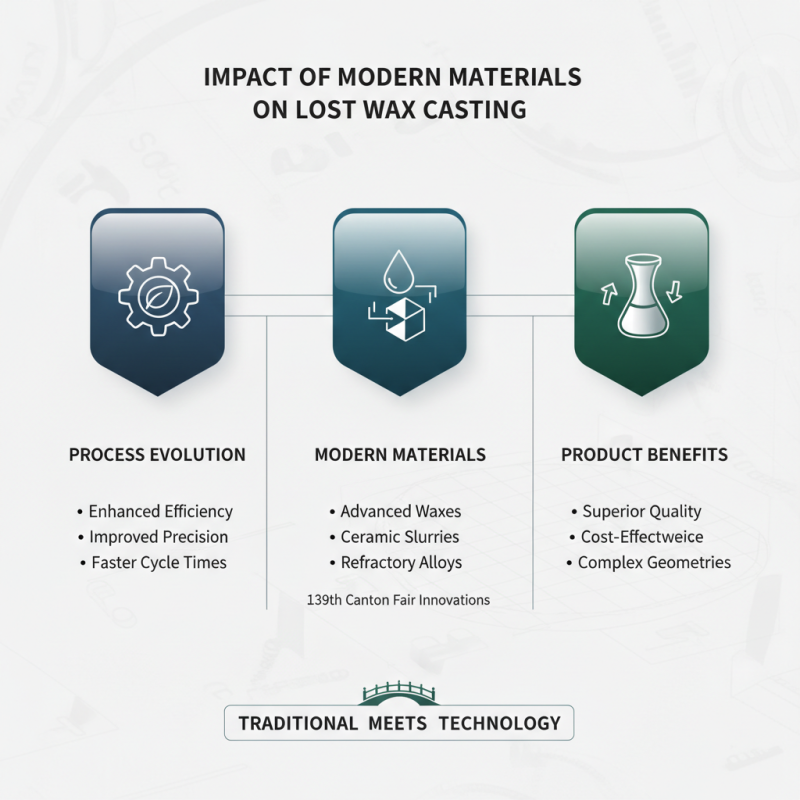
The 139th Canton Fair has seen exciting innovations in lost wax casting. As businesses explore modern materials, the process is evolving rapidly. Traditional methods are being enhanced with new technologies, making casting more efficient and precise. These changes impact product quality and reduce waste significantly.
Modern materials, like advanced polymers and alloys, are becoming popular. They offer improved strength and durability while minimizing environmental impact. New casting techniques also allow for intricate designs that were previously unachievable. However, these advancements bring challenges. The learning curve can be steep, and some manufacturers struggle to adopt them fully.
Investing in training and equipment is essential for staying competitive. There’s a need to rethink quality control measures as well. Sometimes, the results may not meet expectations, leading to delays. Embracing innovation requires flexibility and a willingness to adapt. The journey may not be perfect, but it promises rewarding outcomes.
Future Trends and Developments in Lost Wax Casting within Industries
Lost wax casting is evolving rapidly within various industries. The 139th Canton Fair showcased these innovations. Industry reports suggest a projected growth of 6.2% in the lost wax casting market by 2025. This growth is driven by advancements in technology and materials.
New materials are offering better precision and durability. Innovations in casting processes are minimizing waste, which is crucial for sustainability. However, challenges remain. The high initial costs for new machinery can be a barrier for smaller manufacturers. Many firms are hesitant to adopt these technologies due to this investment.
Additionally, the skills gap among workers poses a problem. Trained professionals are essential for operating new equipment efficiently. A recent survey revealed that 48% of companies face issues filling skilled positions in casting. As trends shift towards automation, companies must rethink their training programs. Integrating technology while balancing human skills is vital for future success in lost wax casting.
Lost Wax Casting Innovations at the 139th Canton Fair
This bar chart illustrates key innovation metrics associated with lost wax casting technologies showcased at the 139th Canton Fair. The dimensions include precision, cost efficiency, lead time, material versatility, and user satisfaction, highlighting the latest advancements and trends in the industry.