Why Choose Investment Casting for Your Next Project?
Investment casting has become a preferred choice for many industries. Kurt Zettner, a recognized expert in the field, once stated, “Investment casting delivers precision and versatility that is hard to match.” This process allows for intricate designs, making it suitable for projects requiring high accuracy and complex geometries.
The versatility of investment casting is evident in its wide-ranging applications. From aerospace components to artistic sculptures, the process adapts to different materials and specifications. It’s a compelling option that incorporates innovative techniques for various industries. However, it is essential to consider the initial costs and the time needed for mold creation. This aspect can be a drawback for some projects with tight budgets or deadlines.
Despite these challenges, investment casting can significantly enhance product quality and efficiency. The ability to produce detailed and durable parts leads to reduced assembly times and improved performance. As industries evolve, investment casting may require further refinement to meet future demands, but its fundamental benefits remain compelling.
Advantages of Investment Casting Over Other Methods
Investment casting has become a popular choice for many manufacturing projects. Its advantages over traditional casting methods are significant. One key benefit is the ability to create complex geometries. This process allows for intricate designs without compromising strength or detail. The precision is remarkable, resulting in parts that require minimal machining after casting.
Another important advantage is the material versatility. Investment casting works with various metals and alloys, making it suitable for diverse applications. This adaptability can lead to reduced production costs. Additionally, the smooth surface finish often eliminates the need for additional treatments. However, not all projects may benefit from this method. Careful consideration of design and production volume is necessary.
The repeatability of investment casting also stands out. Once a mold is created, it can be used multiple times, ensuring uniformity across batches. Yet, the initial setup costs can be higher compared to other methods. It's crucial to weigh these factors against project goals. Finding the right balance is essential for maximizing the advantages of investment casting.
Why Choose Investment Casting for Your Next Project? - Advantages of Investment Casting Over Other Methods
| Advantage |
Description |
Applications |
| Precision |
Investment casting provides high dimensional accuracy and excellent surface finish, reducing the need for further machining. |
Aerospace components, medical devices |
| Material Versatility |
It can be used with a wide range of metals, including ferrous and non-ferrous materials. |
Automotive parts, industrial tools |
| Reduced Waste |
The process generates minimal waste compared to other methods like sand casting, promoting sustainability. |
Energy industry components, machinery parts |
| Complex Geometries |
Able to produce parts with intricate designs that are difficult or impossible to create with other methods. |
Consumer products, architectural elements |
| Cost Efficiency for Large Runs |
Ideal for high-volume production due to lower per-unit costs once the mold is created. |
Electronics enclosures, heavy machinery components |
Key Applications and Industries Benefiting from Investment Casting
Investment casting, also known as precision casting, is a process that offers numerous benefits across various industries. This method is particularly valuable in aerospace. Components in aircraft engines must meet strict standards. Investment casting provides the precision needed for these critical parts. Its ability to shape complex geometries leads to lightweight, strong components, making it ideal for this sector.
The medical industry also reaps the rewards of investment casting. Surgical instruments require impeccable precision and material integrity. This casting method achieves both, ensuring reliability in critical procedures. Even in the automotive sector, manufacturers utilize this method for parts such as valves and brackets. These components need to withstand harsh conditions, and investment casting delivers durable solutions.
Despite its advantages, companies must carefully evaluate their requirements. The initial costs can be higher than other methods. Some may find the lead times extend longer than expected. Balancing quality with timelines remains a challenge. Gathering data from past projects can provide insights, guiding the decision to use this method effectively. Investment casting can drive innovation and efficiency when done right.
Investment Casting Applications by Industry
This bar chart illustrates the distribution of investment casting applications across various industries. The aerospace and automotive sectors benefit most, highlighting the significance of investment casting in high-performance and precision components.
Understanding the Investment Casting Process Step-by-Step
The investment casting process offers a precision-focused solution for manufacturing complex parts. This method allows for intricate designs with excellent surface finishes. According to the Investment Casting Institute, this process can achieve tolerances as tight as ±0.005 inches, which is critical in industries like aerospace and medical equipment.
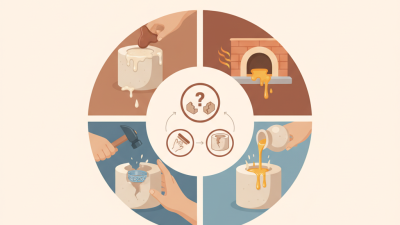
Step-by-step, the investment casting begins with a pattern, typically made from wax or a similar material. This pattern is coated in a ceramic shell by applying several layers. Once dried, the pattern is heated to remove the wax, leaving the ceramic mold behind. The molten metal is then poured into this mold. Industry reports indicate that investment casting reduces machining time by up to 75%, saving both time and costs.
However, there are challenges to consider. The initial investment in tooling can be significant, with costs varying based on complexity and material. Additionally, any defects in the pattern can lead to reworking, delaying the overall production timeline. Understanding these nuances is essential for optimizing the investment casting process in your next project.
Materials Commonly Used in Investment Casting Projects
Investment casting, known for its precision and versatility, commonly utilizes a range of materials to achieve desired outcomes.
Aluminum alloys, stainless steels, and bronze are prevalent in various industries. A study by the American Foundry Society revealed that about 60% of investment casting applications involve aluminum due to its lightweight properties and excellent corrosion resistance. Stainless steels, on the other hand, account for around 30% of these projects, valued for their strength and durability.
When selecting materials, consider the project's specific requirements. For example, if high-temperature resistance is critical, opt for specialized alloys. Interestingly, while investment casting offers exceptional detail, the process can be sensitive to material imperfections. Ensure you source high-quality materials to minimize defects. Testing and verification are crucial for maintaining quality standards.
Tip: Always conduct thorough research on material properties before committing. Understanding the limitations and requirements of each material can prevent costly mistakes. Regularly review project notes. Reflecting on past challenges can lead to better material choices in future projects. Pay attention to the balance between cost and quality. Sometimes, spending a bit more can lead to significantly better results.
Cost Considerations: Investment Casting vs. Other Manufacturing Techniques
When considering manufacturing techniques, cost is a significant factor. Investment casting often stands out due to its efficiency and low waste. This method allows for complex geometries, reducing the need for additional machining. Each mold is reusable, which lowers production costs over time. Unlike other techniques, it can handle a variety of metals and alloys, enhancing versatility.
However, investment casting is not without its challenges. The initial setup cost can be higher than processes like sand casting. It requires precise modeling, which can add to costs. Additionally, the production timeline may be extended, especially for detailed designs. Companies should weigh these factors carefully against their project needs.
Moreover, the final quality of components can vary. Inconsistent quality may arise if the casting process is not meticulously managed. This underscores the importance of working with experienced manufacturers. Understanding these nuances can lead to a more informed decision-making process.