China Top Investment Casting Suppliers for Global Buyers?
Investment casting has emerged as a pivotal manufacturing method within various industries. In 2022, the global investment casting market was valued at approximately $15.6 billion. This figure is expected to grow significantly, reaching around $23.3 billion by 2030, according to industry analysis. Such growth highlights the increasing reliance on investment casting for precision components.
China stands out as a key player in the investment casting sector. The country’s suppliers are known for their capability to meet global demand while maintaining competitive pricing. In fact, China's investment casting exports have consistently increased, with a reported growth rate of 8% annually over the past five years. However, potential buyers should remain cautious. Quality control and supplier reliability can vary widely. Selective sourcing is essential to ensure standards are met.
Understanding the landscape of investment casting suppliers in China is crucial. Buyers must weigh cost against quality. While some manufacturers boast impressive capabilities, others may fall short. Therefore, thorough research is indispensable. Engaging with reputable suppliers can lead to successful partnerships that leverage China's strengths in investment casting technology.
Overview of Investment Casting in China
Investment casting is a crucial process in manufacturing. In China, it has seen significant growth. The country is becoming a hub for investment casting suppliers. Their expertise and advanced technology attract global buyers. Many industries benefit from these castings, including automotive, aerospace, and medical sectors. Companies can find a wide range of capabilities, from small components to large structural parts.
Choosing the right supplier is essential. Companies should evaluate quality, production capacity, and service. It's also necessary to consider certifications and standards. Tips for selecting suppliers include visiting facilities, checking references, and asking for samples. Understanding the supplier's experience in your specific industry can also provide benefits.
Challenges exist in this industry. Not all suppliers maintain high standards. Some may struggle with delivery timelines or quality consistency. It's vital to communicate expectations clearly. Building a strong rapport with suppliers can lead to better outcomes. Cultivating relationships can mitigate risks and enhance trust in the long term.
Investment Casting Industry Overview - China
Key Factors for Choosing Investment Casting Suppliers
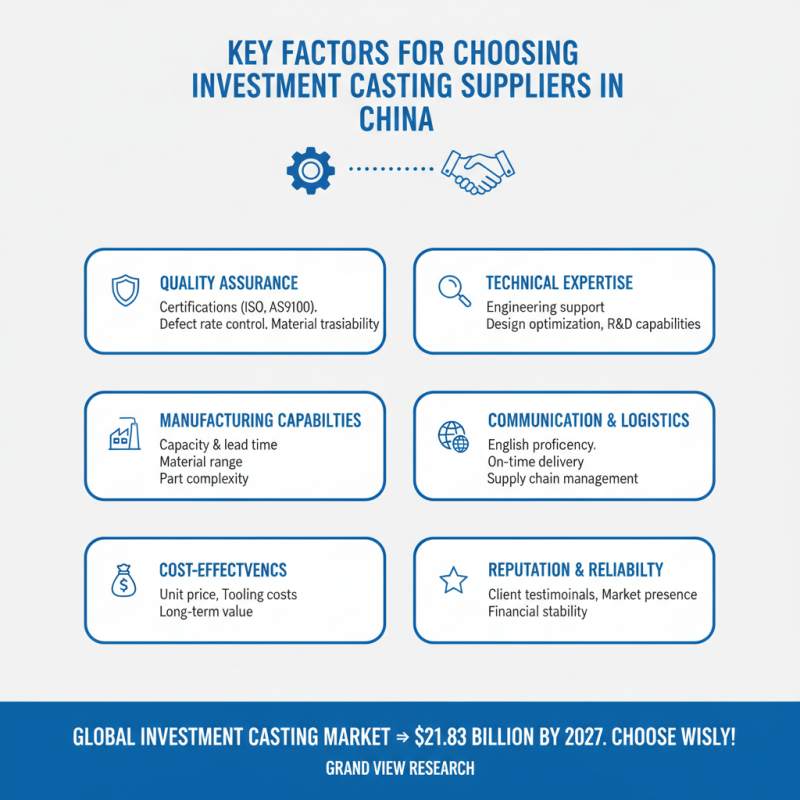
Choosing the right investment casting supplier in China can significantly impact your production. Understanding key factors ensures the best partnership. One crucial element is quality assurance. A report by Grand View Research notes that the global investment casting market is expected to reach $21.83 billion by 2027. To capture this growth, suppliers must adhere to stringent quality standards.
Another important factor is technical expertise. Suppliers should demonstrate experience with various materials, such as steel, aluminum, and bronze. The best suppliers invest in advanced technology and skilled labor. According to a survey by MarketsandMarkets, around 70% of manufacturers prioritize innovative capabilities when selecting an investment casting supplier.
Communication is also vital. Clear and consistent dialogue fosters better collaboration and understanding. Some suppliers may struggle with language barriers or cultural differences. However, establishing effective communication channels can mitigate these challenges and improve project outcomes. While many companies excel, not all suppliers may share the same level of commitment to customer service. Careful evaluation is essential to make informed choices.
Top Investment Casting Suppliers in China
China has emerged as a crucial hub for investment casting suppliers, attracting global buyers. The casting process here utilizes advanced materials and technologies, ensuring high precision and quality. Many Chinese suppliers boast experience in various sectors, such as automotive and aerospace. Their ability to customize products offers an edge, meeting specific customer demands with agility.
Local suppliers often juggle multiple projects, which can lead to inconsistent quality. Some companies work tirelessly to improve their production lines, yet mistakes can happen. Clients should conduct thorough assessments before partnering with a supplier. It is essential to evaluate their certifications and past projects, ensuring they align with international standards.
Another consideration is communication. Language barriers and differing business practices may complicate collaboration. However, proactive engagement can bridge the gap. Reliable suppliers often provide support throughout the process, from design to final delivery. This creates a more seamless experience for global buyers, helping them navigate challenges effectively.
China Top Investment Casting Suppliers for Global Buyers
| Supplier Location |
Industry Focus |
Annual Revenue (Million USD) |
Years in Business |
Export Markets |
| Shandong |
Automotive, Aerospace |
250 |
15 |
USA, Europe, Asia |
| Zhejiang |
Marine, Heavy Machinery |
180 |
10 |
North America, Europe |
| Hebei |
Construction, Utilities |
300 |
20 |
Asia, South America |
| Jiangsu |
General Manufacturing |
150 |
8 |
Europe, Africa |
| Shaanxi |
Electronics, Defense |
220 |
12 |
Middle East, Asia |
Comparative Analysis of Supplier Offerings
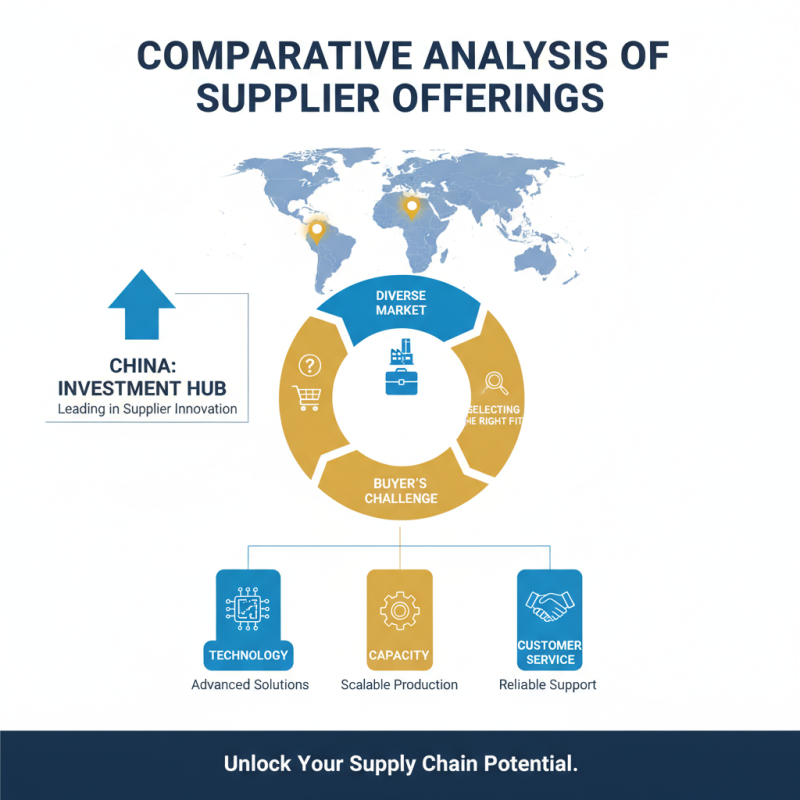
China has emerged as a leading hub for investment casting suppliers. The market is diverse, with various suppliers offering unique services and products. Buyers are often faced with the challenge of choosing the right supplier that aligns with their specific needs. Each company varies in technology, capacity, and customer service.
A comparative analysis reveals that some suppliers excel in precision casting. They utilize advanced technology to achieve high accuracy. Others may focus on volume production, catering to large orders. Buyers need to assess the supplier’s production capabilities and past performance. Not all suppliers have consistent quality control measures, which can lead to variability in product outcomes.
Further investigation into supplier reliability is essential. Some companies have strong industry experience, while others may lack in this area. Checking customer reviews can provide insights into their credibility. Additionally, understanding their logistics capabilities is critical. Delivery timelines can be inconsistent, affecting production schedules. Ultimately, buyers must weigh their options carefully and identify the best fit for their investment casting needs.
Global Market Trends in Investment Casting Industry
The investment casting industry is experiencing notable shifts in the global market. Increased demand for precision components drives growth. Many industries, including aerospace and automotive, seek lightweight yet robust materials. This trend pushes manufacturers to adopt advanced casting technologies. The market shows a strong appetite for efficiency and innovation.
Challenges remain, particularly in supply chain management. Many suppliers face disruptions that impact material availability. Furthermore, strict regulations on material sourcing can complicate production. These factors create a need for suppliers to enhance operational resilience. The pursuit of sustainability also influences trends, as companies prioritize eco-friendly practices.
Regional disparities in the investment casting market are evident. Some areas excel in technology and expertise, while others struggle with outdated methods. Buyers must assess their suppliers carefully. Quality assurance becomes crucial in making decisions. Understanding these trends helps global buyers navigate the complexities of the investment casting landscape. Adapting to these changes is essential for success.