What are the Benefits of Alloy Steel Casting Parts in 2026?
In 2026, the relevance of Alloy Steel Casting Parts continues to grow across various industries. These components are known for their strength and durability. As manufacturing processes advance, the benefits of using alloy steel become clearer.
Alloy Steel Casting Parts offer a combination of superior mechanical properties. The materials used increase wear resistance. This makes them ideal for heavy-duty applications in sectors like automotive and construction. The cost-effectiveness of these parts also stands out. Industries can reduce replacement costs due to their enhanced longevity.
However, challenges exist in their production. The casting process must be meticulously controlled to avoid defects. Quality assurance remains a critical aspect of maintaining standards. As industries evolve, addressing these issues will be paramount for maximizing the benefits of Alloy Steel Casting Parts.
Benefits of Alloy Steel Casting Parts: Overview and Importance
Alloy steel casting parts are gaining attention in various industries. Their unique properties enhance performance in numerous applications. These parts often feature a blend of metals, producing materials that are strong and resilient.
The benefits of alloy steel casting parts are significant. They exhibit improved strength and toughness compared to standard steel. This property allows for thinner sections and lighter components, which can reduce material costs. Furthermore, their corrosion resistance makes them suitable for harsh environments. In 2026, these attributes are essential as industries seek more durable solutions.
However, the production of alloy steel casting parts is not without challenges. The casting process can be complex and may result in defects. These issues require careful monitoring. Ensuring high-quality outcomes demands skilled workers and advanced technology. The balance between innovation and practicality is an ongoing discussion in the field.
Enhanced Mechanical Properties of Alloy Steel Casting Parts
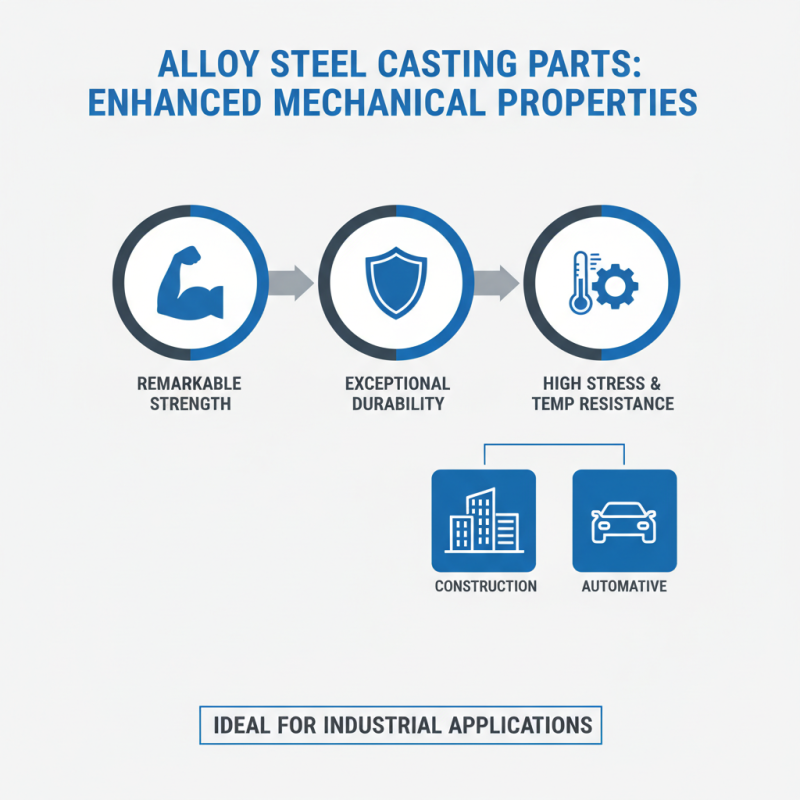
Alloy steel casting parts have gained immense popularity due to their enhanced mechanical properties. These materials exhibit remarkable strength and durability. They can withstand high stress and extreme temperatures. This makes them ideal for various applications in industries like construction and automotive.
One key benefit is their resistance to wear and corrosion. Alloy steel can handle harsh environments, which prolongs the lifespan of components. For instance, in heavy machinery, such parts reduce maintenance frequency. This translates to significant cost savings over time.
**Tip:** Regular inspections can help identify wear early. This ensures optimal performance.
Moreover, alloy steel casting can be tailored to specific needs. Manufacturers can adjust the composition for desired traits. This flexibility allows for innovation in design. However, choosing the right alloy is crucial.
**Tip:** Conduct a thorough analysis of operational requirements. This will guide material selection effectively.
Balancing performance and cost can be challenging. Sometimes, the most expensive option isn't the best fit. So, understanding your project's needs is vital. In the evolving landscape of 2026, these insights will be invaluable.
Cost-Effectiveness and Economic Advantages in Manufacturing
Alloy steel casting parts offer significant cost-effectiveness in manufacturing. The durability of alloy steel reduces maintenance and replacement costs over time. This quality makes it a preferred choice for many industries.
Tip: Consider the long-term savings when choosing materials for manufacturing. Sometimes, investing a bit more upfront can lead to lower costs down the line.
Another economic advantage stems from the ability to produce complex shapes. Alloy steel casting allows for intricate designs that would be costly or impossible with other methods. This flexibility can lead to reduced waste and optimized production processes.
Tip: Evaluate the design capabilities of materials you choose. Complex designs can decrease overall manufacturing costs but may also require more initial investment in technology and skill. Remember, efficiency should always be balanced with quality.
Applications of Alloy Steel Casting Parts in Various Industries
Alloy steel casting parts have gained significant traction across various industries in 2026. They are particularly notable in the automotive sector. In 2025 alone, the demand for high-strength components surged by 30%. This increase is attributed to the need for durable and lightweight materials. Manufacturers are now favoring alloy steel for engine parts and chassis due to its superior fatigue resistance.
The aerospace industry has also embraced alloy steel castings. They are essential for producing turbine components. Reports indicate that over 50% of modern jet engines now utilize alloy steel in some capacity. This trend is driven by the need for materials that can withstand extreme temperatures and pressures. Engineers are continually exploring new alloys to enhance performance. However, the complexity of designing these components can lead to unexpected challenges during production.
In construction, alloy steel parts are crucial for structural integrity. They are often used in bridges and high-rise buildings. Even with the benefits, there are concerns about sourcing raw materials ethically. Recent analysis revealed that nearly 15% of alloy steel is produced from questionable practices. This raises questions about sustainability and long-term impacts. As industries advance, striking a balance between innovation and responsibility remains a critical consideration.
Benefits of Alloy Steel Casting Parts in 2026 - Applications in Various Industries
| Industry |
Benefits |
Applications |
| Automotive |
High strength-to-weight ratio, durability |
Engine components, chassis parts |
| Aerospace |
Corrosion resistance, heat resistance |
Landing gear, turbine engines |
| Construction |
Toughness, weldability |
Structural components, fasteners |
| Mining |
Wear resistance, hardness |
Mining equipment, drill bits |
| Oil and Gas |
High strength, impact resistance |
Pipelines, valves |